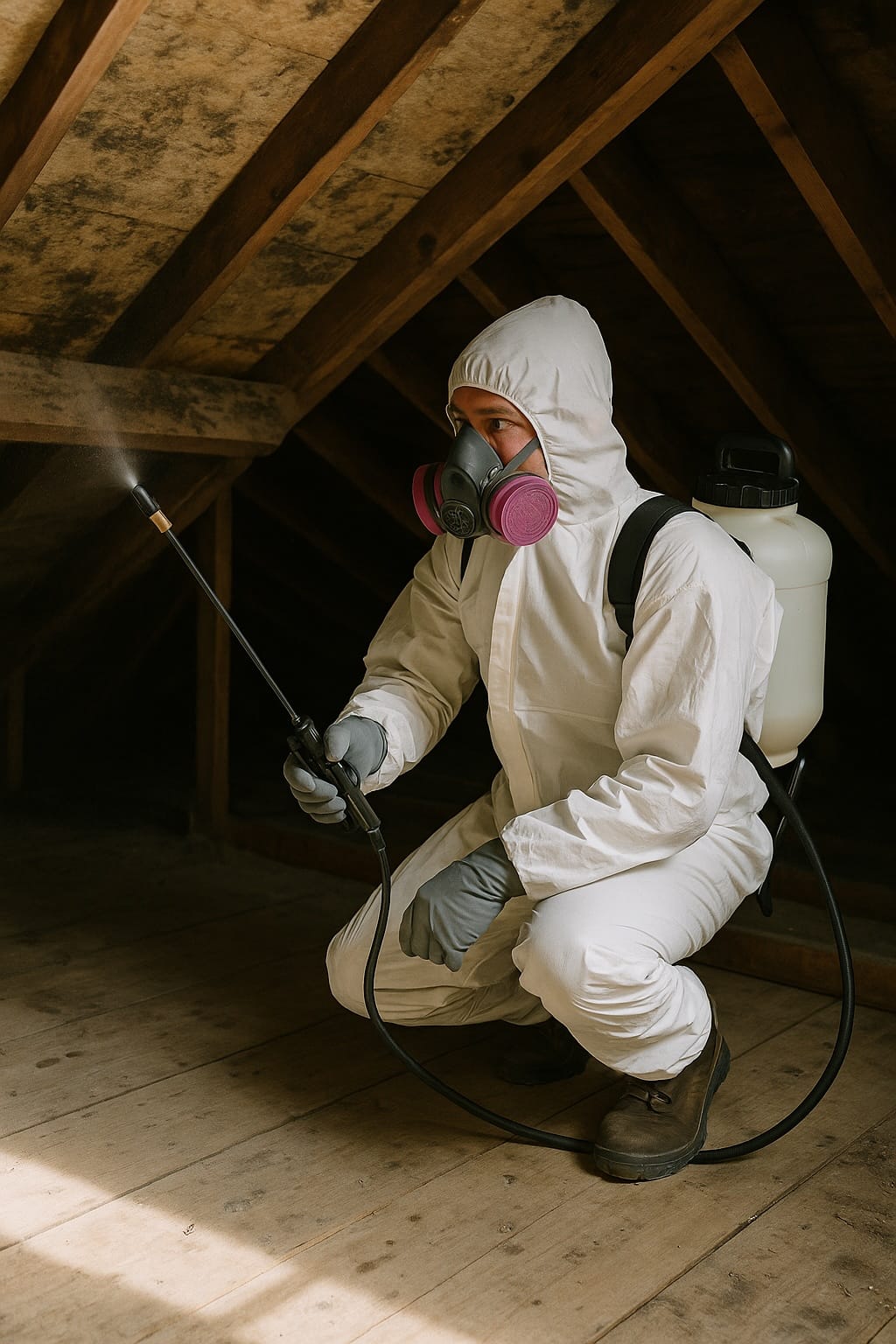
If you’ve ever had raccoons, squirrels, or birds in the attic, you already know the obvious problems: scratching, thumping, torn soffits, and that uneasy feeling that something is living above your ceiling. What many Ottawa homeowners don’t realize is what happens after the wildlife is gone. The attic can be left with soiled insulation, trapped moisture, and the perfect conditions for mold to take hold.
Wildlife mess isn’t just unpleasant, , it can change how your attic “breathes.” Once insulation gets disturbed and contaminated, warm air from the house moves up more easily, meets cold roof decking in winter, and that’s where condensation starts. Add droppings and nesting material, and you’ve got a damp, organic mix that mold loves.
Why mold shows up after an animal incident
Mold needs two things: moisture and something to feed on. After wildlife activity, you often have both. Animals compress insulation and create tunnels, leaving bare spots where heat escapes. They also drag in nesting material that holds humidity. In some cases, an entry point they chewed open allows wind-driven snow or rain to get in. Even if the roof isn’t leaking, a poorly ventilated attic plus air leaks from the living space can create a steady cycle of dampness.
That’s why “just spraying something” rarely fixes the issue. If the insulation is contaminated or wet, and the airflow problems aren’t addressed, mold can come right back.
Signs it’s time to take it seriously
Sometimes mold in an attic is visible as dark staining on the roof sheathing. Other times, you notice it indirectly: a musty smell, headaches that seem to show up at home, or insulation that looks clumped, flattened, or discoloured. You might also see frost on nails in winter, , a sign that warm, moist air is getting into the attic and condensing.
If wildlife was involved, don’t assume the mess is localized to one corner. Animals move around, and so do odors and moisture. A proper inspection can tell you whether you’re dealing with surface staining or a broader contamination issue.
The right way to handle attic mold after wildlife
A good attic mold removal job isn’t a quick wipe-down. It’s a process that aims to remove the source, clean properly, and prevent a repeat. That usually means:
- Removing insulation that’s contaminated by droppings or urine
- Decontaminating affected areas so odors and bacteria aren’t left behind
- Cleaning or treating mold on wood surfaces when needed
- Checking ventilation and identifying air leaks from the home
- Rebuilding the insulation layer so it’s even, dry, and performing properly
For homeowners who want to understand what professional treatment and sanitation can involve, this page explains it clearly: attic decontamination services in Ottawa. And if your attic needs a full reset after an animal incident, , insulation removal, debris cleanup, and getting things back to normal, , these attic cleanup services in Ottawa outline what that can look like.
Why Ottawa homes are especially vulnerable
Ottawa’s climate is hard on attics. Long cold stretches create strong temperature differences between the living space and the roof. If wildlife damage has opened up gaps or ruined insulation coverage, warm air rises into the attic more easily. That warm air carries moisture. When it hits cold surfaces, you get condensation, , and condensation over time leads to mold.
In spring, the problem can worsen as the attic warms up and any damp materials take longer to dry out. That’s why it’s smart to deal with it properly, not just cosmetically.
Preventing mold from coming back
Once the attic is clean and dry, prevention is all about stopping the conditions that caused it. That can mean improving ventilation, fixing bathroom fan venting, and sealing the air leaks that push moisture into the attic. It also means making sure wildlife entry points are properly closed so you’re not dealing with the same mess next season.
A cleaner attic means a healthier, more comfortable home
Mold after wildlife activity is common, , but it’s not something you have to live with. When the contaminated insulation is removed, the attic is sanitized, and the underlying airflow issues are addressed, most homeowners notice the difference quickly: less odor, more consistent temperatures, and peace of mind that the “hidden” problem has actually been handled. If you suspect your attic has mold after a wildlife incident, it’s worth getting it checked before the damage spreads, , and before the next Ottawa winter makes a small problem feel a lot bigger.